Starting a Home Candle Business in India: Legal & Setup Guide
Over the past three years, the handcrafted home fragrance and scented candle industry in India has experienced exponential growth. What was once dismissed as a minor festive hobby has evolved into a multi-crore consumer lifestyle sector.
Indian consumers across Tier 1 and Tier 2 cities are investing heavily in home ambiance, self-care rituals, mindful aesthetics, and premium gifting. The festive surge around Diwali, Durga Puja, Christmas, and the winter wedding season generates intense demand for bespoke, high-end scented candles.
Yet moving from pouring a few candles for friends and family to running a legally compliant, profitable home-based manufacturing enterprise requires clear operational clarity. You must navigate business registration, tax obligations, courier logistics across India's demanding transit routes, compliant packaging, and profitable unit economics.
This comprehensive guide delivers a practical, step-by-step roadmap to starting, branding, and scaling a home candle business in India from your kitchen or spare studio room.
1. Legal Foundations: MSME, GST, and Business Registration
Setting up your business legally from day one establishes credibility with suppliers, corporate clients, and payment gateways.
1. Business Structure: Sole Proprietorship
For 90% of solo makers starting out from home, a Sole Proprietorship is the simplest, most cost-effective legal structure:- It requires no formal company incorporation fees or expensive annual audit compliances.
- You operate under your chosen brand trade name, linked to your personal PAN and Aadhaar.
- As your annual revenue scales past ₹25 to ₹50 Lakhs, you can easily transition into a Private Limited Company or One Person Company (OPC).
2. MSME Udyam Registration (Completely Free)
The Ministry of Micro, Small & Medium Enterprises provides the Udyam Registration online:- Cost: 100% free on the official government portal (
udyamregistration.gov.in). Never pay private agents for this registration. - Benefits: Unlocks access to collateral-free MSME bank loans, priority sector lending, government subsidy schemes, and legal protection against delayed commercial payments from B2B corporate buyers under the MSMED Act.
3. Understanding GST Rules in India
Navigating the Goods and Services Tax (GST) is a critical milestone:- Exemption Threshold for Goods: Under current Indian GST law, if you sell goods exclusively within your home state (intra-state sales) through offline markets, pop-ups, or direct WhatsApp sales, you are exempt from mandatory GST registration until your annual turnover exceeds ₹40 Lakhs (₹20 Lakhs in northeastern and special hill states).
- The E-Commerce Caveat: If you sell inter-state across India through your own independent website (Shopify, WooCommerce) or marketplace platforms, obtaining a voluntary GSTIN is highly advantageous. It allows you to open a dedicated current bank account and claim full Input Tax Credit (ITC) on all the raw waxes, fragrance oils, and glass vessels you purchase through B2B platforms like Ekora Bazaar.
- Applicable Tax Slabs: Decorative scented candles are categorized under HSN 3406 with an 18% GST tax rate.
2. Setting Up Your Home Studio and Sourcing Raw Materials
You do not need a commercial warehouse to launch. A 100-square-foot spare bedroom, clean utility room, or dedicated counter in a well-ventilated space is sufficient for producing 500 to 1,000 candles per month.
Key Workstations:
1. The Melting Station: A sturdy table with an induction cooktop or double-boiler setup, heat-resistant silicone mats, and a class ABC fire extinguisher mounted nearby. 2. The Pouring & Curing Area: A level, draft-free granite, stone, or wooden table away from ceiling fans, where candles can sit completely undisturbed for 48 hours to cool slowly without frosting. 3. The Packaging & Labeling Desk: Clean surface with digital scales, bubble wrap dispensers, and boxes.Sourcing Direct from Manufacturers:
Avoid buying retail-packaged craft kits that markup ingredients by 300%. Source professional supplies in bulk:- High-grade hydrogenated soy wax flakes from our wholesale candle waxes catalog at ₹280 to ₹380 per kg.
- IFRA-certified, high-flashpoint concentrated fragrance oils from our scent & flavor lab at ₹1,800 to ₹3,200 per kg.
- Lead-free braided cotton wicks and sustainers from our wick systems collection.
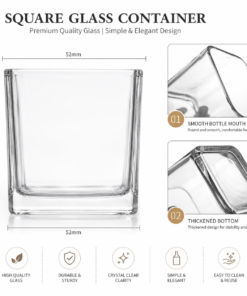
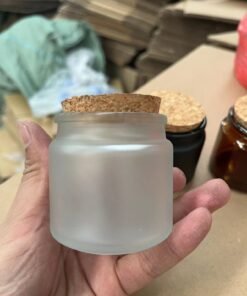
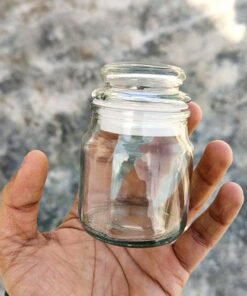
- High-clarity amber and frosted glass tumblers from our candle jars and containers studio.
3. Mandatory Product Labeling and Safety Standards in India
Under the Legal Metrology (Packaged Commodities) Rules, 2011 and the Consumer Protection Act, 2019, any packaged good sold commercially in India must carry clear statutory disclosures:
Essential Label Information:
1. Generic Name of Commodity: e.g., "Handcrafted Scented Soy Wax Candle". 2. Net Quantity: Stated by net weight in grams (e.g., "Net Wt. 200g / 7.05 oz") or count (e.g., "Contains 1 Unit"). 3. Month and Year of Manufacture: e.g., "Mfg Date: October 2026". 4. Maximum Retail Price (MRP): Must explicitly state "MRP ₹XXX.00 (Inclusive of all taxes)". 5. Manufacturer / Packer Details: Name, complete registered address, and customer care contact details (email and telephone number). 6. Safety Burning Warning Symbols: Standard iconography depicting: - "Never leave burning candle unattended," - "Keep away from children and pets," - "Burn on a heat-resistant surface," - "Trim wick to 6 mm before lighting."4. Packaging for Indian Domestic Couriers (Zero Breakage Guarantee)
In India, domestic surface and air shipments travel over bumpy highways and undergo rigorous sorting hub handling. Glass breakage during shipping will destroy your brand reputation and drain margins through replacements.
The 4-Layer Packaging Rule:
1. Primary Vessel Protection: Wrap the glass candle container tightly in 2 layers of 10mm bubble wrap or thick corrugated honeycomb paper. 2. Individual Rigid Box: Place the wrapped candle into a snug-fitting 3-ply corrugated mono-carton box with an interior cardboard collar that locks the lid in place. 3. Master Shipping Shipper: For multiple candle orders, pack individual cartons into an outer 5-ply shipping box filled with biodegradable starch packing peanuts or crumpled kraft void-fill. The boxes must not rattle or move when shaken vigorously. 4. Fragile Warning Tape: Seal with heavy-duty reinforced packing tape and affix large red "FRAGILE – HANDLE WITH CARE – GLASS" stickers on all sides.Logistics Partners:
Integrate with multi-courier shipping aggregators like Shiprocket, Delhivery Direct, or NimbusPost:- Sourcing surface logistics costs roughly ₹60 to ₹110 per 500g package across major Indian metro lanes.
- Provide automated WhatsApp tracking updates to customers to drastically reduce Cash-on-Delivery (COD) customer rejections and Return-to-Origin (RTO) rates.
5. Sales Channels: Where to Sell in India
A resilient handmade business diversifies its customer acquisition channels:
1. Direct-to-Consumer (D2C) Brand Website
Build a clean, minimalist storefront using Shopify or WooCommerce. Owning your customer data (emails, phone numbers) allows you to run targeted festive email marketing and VIP customer loyalty programs with zero marketplace commissions.2. Instagram Social Commerce
Instagram is the primary visual discovery engine for luxury lifestyle goods in India:- Share behind-the-scenes studio pouring videos, scent formulation notes, and cozy evening burn reels.
- Offer easy order placement via direct WhatsApp Business links connected to UPI payment handles (GPay, PhonePe, Paytm).
3. Pop-Up Flea Markets & Artisan Exhibitions
Participating in curated artisan bazaars (such as Sunday Soul Sante in Bengaluru, Lil Flea in Mumbai/Delhi, or festive lifestyle exhibitions in tier-1 hotels) provides immediate, high-volume cash flow:- Customers can physically smell your fragrances—the single greatest driver of candle sales.
- Expect to sell 50 to 200 candles over a 2-day festive weekend pop-up.
4. B2B Corporate Gifting and Wedding Favors
Corporate Diwali hampers and luxury wedding gifting represent high-volume, predictable revenue:- Companies order 100 to 1,000 customized candles for employees and VIP clients, paying 50% advance deposits upfront.
- Sourcing wholesale containers like our golden flat lotus urli bowls or luxury gold metal bowls enables you to create striking cultural gifting sets that retail between ₹899 and ₹1,899.
6. Financial Economics: Realistic Profit Projections
Let us look at a realistic monthly financial projection for a home studio producing and selling 250 candles per month:
| Line Item | Unit Cost (INR) | Monthly Total (250 Units) | | :--- | :--- | :--- | | Direct Raw Materials (Wax, Fragrance, Wick) | ₹102 | ₹25,500 | | Glass Containers, Lids & Labels | ₹75 | ₹18,750 | | Shipping Boxes & Protective Bubble Wrap | ₹28 | ₹7,000 | | Studio Electricity & Heat Gun Power | ₹6 | ₹1,500 | | Shopify / Website Domain Subscriptions | ₹10 | ₹2,500 | | Meta Ads / Customer Acquisition (₹180/sale) | ₹180 | ₹45,000 | | Total Monthly Operating Outlay | ₹401 | ₹1,00,250 | | Gross Revenue (Selling 250 candles @ ₹899 retail) | ₹899 | ₹2,24,750 | | Net Monthly Profit to Founder | ₹498 | ₹1,24,500 |
Key Takeaway: By maintaining disciplined wholesale raw material sourcing through Ekora Bazaar and pricing your candles appropriately at ₹899 (rather than underpricing at ₹350), producing just 10 candles a day generates a healthy net income exceeding ₹1.2 Lakhs per month.