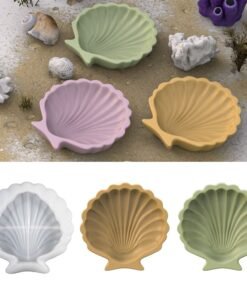
Selecting Moulds for Epoxy Resin and Eco-Stone
The explosion of resin art, ocean wave boards, preserved botanical keepsakes, and eco-stone home decor (such as Jesmonite AC100, acrylic-modified gypsum, and resin-stone composites) has established casting as a dominant discipline in modern Indian craft ateliers.
In casting, the mould is not simply a container; it is the ultimate determinant of your finished piece's surface finish, dimensional fidelity, demoulding speed, and structural integrity.
Novice makers often assume that any flexible kitchen container or cheap silicone ice tray can serve as a casting mould. However, the chemical thermodynamics of synthetic resins and composite mineral stones impose intense physical demands on mould materials. Epoxy resin generates significant internal exothermic heat during its cross-linking reaction, while eco-resins require rigid planar support to prevent bowing and ensure perfectly flat, wobble-free coaster and tray bases.
Selecting the appropriate mould material—high-gloss platinum silicone, matte silicone, thermoformed plastic, or custom acrylic forms—requires evaluating resin cure chemistry, surface finish targets, and production run lifespan.
This guide provides an in-depth comparison of mould types, thermal management, degassing protocols, and maintenance best practices for Indian resin artists.
1. Material Showdown: High-Gloss Silicone vs. Rigid Plastics
High-Gloss Platinum Silicone Moulds
Silicone is the industry-standard choice for intricate art casting, deep coasters, geometric planters, and organic forms:- Surface Mirror Finish: High-quality silicone moulds replicate the exact surface texture of the master model down to sub-micron dimensions. Moulds poured against polished acrylic or glass masters produce casts with a mirror-bright, crystal-smooth finish directly out of the mould, eliminating hours of labor-intensive sanding and polishing.
- Elasticity and Undercut Tolerance: Flexible silicone stretches up to 400% to 600% without permanent distortion, enabling the release of complex, under-cut, or three-dimensional shapes (like our 6 cavity dinosaur mould or concrete ripple tray mould) that would lock rigidly into hard containers.
- Chemical Resistance: Platinum-cure silicone resists chemical attack from amine hardeners present in epoxy resin formulas, outlasting cheaper condensation-cure moulds by four to five times the number of casting cycles.
Rigid Plastics (Polypropylene, HDPE, and Acrylic)
Rigid plastics are the preferred format for large architectural slabs, river tables, Jesmonite trays, and geometric terrazzo boards:- Planar Flatness: Flexible silicone moulds with wide, thin bases tend to bow slightly under the heavy hydrostatic weight of mineral composites or large resin pours, resulting in coasters that wobble on tabletop surfaces. Rigid HDPE and thick acrylic forms ensure laser-straight, dead-flat surfaces.
- Longevity and Reusability: HDPE (High-Density Polyethylene) forms with screwed or clamped sides can be taken apart, cleaned, and reassembled indefinitely without tearing or clouding.
- Release Requirements: Unlike silicone's natural non-stick characteristics, rigid plastics require deliberate application of release agents (such as paste carnauba wax, specialized fluoropolymer sprays, or dedicated sheathing tape) to prevent permanent chemical bonding.
- Browse our precision studio moulds catalog.
2. The Exothermic Challenge in Epoxy Resin Casting
Epoxy resin cures via an exothermic chemical reaction between epoxide groups and polyamine hardeners. The heat released during this reaction directly impacts mould degradation:
Deep Pours vs. Shallow Layers
- Shallow Pour Resins (Tabletop / Art Resin): Formulated for quick surface curing in layers between 3 mm and 10 mm. When poured into deep blocks (exceeding 25 mm), the rapid heat generation cannot dissipate into room air. The core temperature can spike to 100°C to 150°C, causing the resin to boil, yellow, crack, and melt the silicone mould liner into a permanent bond.
- Deep Pour / Casting Resins: Formulated with slower reactivity to release heat gradually over 24 to 72 hours, allowing safe pours up to 50 mm to 100 mm in silicone moulds without thermal shock or mould burning.
Heat Damage and Silicone Degradation
Repeated exposure to resin exotherms causes silicone to dry out, lose its natural release oils, and turn brittle. The first sign of silicone fatigue is surface cloudiness: the shiny mirror finish becomes dull and micro-pitted, transferring an orange-peel haze to subsequent resin casts.To maximize silicone mould life during resin casting: 1. Never Apply Direct Torch Flame to Mould Walls: Using a butane culinary torch or heat gun to pop surface bubbles is common, but waving open flames close to silicone edges instantly bonds the liquid resin to the silicone, tearing the mould upon demoulding. Instead, mist the surface with 99% isopropyl alcohol from an atomizer or use a vacuum degassing chamber before pouring. 2. Use Specialized Mould Release Agents: Spraying a light mist of non-silicone, aerosolized resin release agent into clean moulds creates a sacrificial boundary layer that protects silicone pores from amine attack.
3. Casting with Eco-Resin, Jesmonite, and Gypsum Composites
Water-based mineral composites (like Jesmonite AC100, acrylic-modified gypsum, and resin-stone powders) behave very differently from synthetic epoxy:
- Thermal Profile: Eco-resins generate moderate warmth as the acrylic-calcium sulfate matrix crystallizes, but they do not experience destructive thermal spikes. They are exceptionally gentle on silicone moulds, allowing 200+ releases from a single mould.
- Matte vs. Gloss Surfaces: Mineral composites dry to a velvety, matte stone texture regardless of how shiny the mould is. Do not spend extra capital on high-gloss polished moulds for Jesmonite; standard satin or matte silicone moulds produce identical results. Color them beautifully with our liquid pigments for concrete & Jesmonite.
- Moisture Evaporation: Mineral stones require moisture to escape as they cure. Demoulding within 30 to 45 minutes of pouring allows the green cast to breathe and complete its air-drying process on wire racks over the subsequent 24 to 48 hours.
4. Mould Sizing and Volume Calculation Formula
Avoid costly raw material waste or under-filled cavities by calculating precise volumetric displacement before mixing:
Simple Studio Water Method:
1. Place the empty, clean mould on a digital scale and tare to zero. 2. Fill the mould cavity with plain tap water to your desired fill line. 3. Record the weight of the water in grams. (1 gram of water = 1 cubic centimeter / 1 ml of volume). 4. Multiply water weight by the specific gravity of your casting medium: - For Standard Epoxy Resin (Specific Gravity ~1.1): Multiply water weight by 1.1 to determine total resin mix weight. - For Eco-Stone / Jesmonite (Specific Gravity ~1.7 to 1.8): Multiply water weight by 1.75 to calculate total powder and liquid slurry weight. 5. Thoroughly dry the mould with lint-free microfiber before introducing moisture-sensitive casting resins.Explore our eco-resin & stone moulds collection for verified commercial casting designs.