Fragrance Oil vs Essential Oil for Candles and Soap
In the handcrafted beauty and home fragrance industry in India, few debates evoke stronger passions than the choice between Fragrance Oils (FO) and Pure Essential Oils (EO).
Proponents of essential oils champion pure botanical purity, plant aromatics, and holistic aromatherapy benefits. Advocates of professional fragrance oils emphasize complex olfactory design, powerful scent throw, superior heat stability, and predictable batch repeatability.
For an independent candle maker or soap artisan launching a brand in India, choosing between these two aromatic categories is not merely a philosophical question—it is a critical operational decision that directly dictates your product performance, manufacturing costs, shelf life, and retail pricing in Indian Rupees (INR).
This guide provides an objective, science-based comparison of fragrance oils versus essential oils—examining chemical composition, thermal behavior in candle wax, saponification performance in soap, cost differentials, and skin safety.
1. Defining the Chemistry: Synthesized Molecules vs. Botanical Extracts
Understanding what is inside the bottle is the foundation of professional scent formulation:
What Is a Pure Essential Oil?
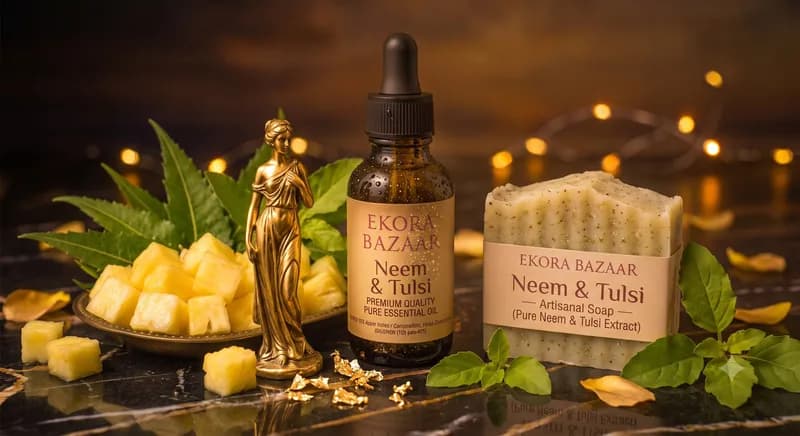
An essential oil is a concentrated, volatile liquid hydrophobic extract distilled directly from botanical plant tissue (flowers, leaves, bark, roots, seeds, or fruit peels) via steam distillation, hydro-distillation, or mechanical cold pressing:- Chemical Complexity: A single essential oil (such as Lavandula angustifolia or Indian Vetiver Chrysopogon zizanioides) is composed of hundreds of naturally occurring phytochemicals—including monoterpenes, sesquiterpenes, aldehydes, ketones, and phenols.
- Natural Variability: Because they are agricultural crops, an essential oil's aroma and chemical profile naturally fluctuate depending on harvest climate, soil terroir, rainfall, and distillation technique.
- Explore our batch-tested pure essential oils catalog.
What Is a Fragrance Oil?
A fragrance oil is a purpose-engineered aromatic compound formulated by professional aroma chemists:- Composition: Combines nature-identical synthetic aroma molecules (like vanillin, benzyl acetate, hedione, and ambroxan), isolated botanical isolates (such as plant-derived linalool or geraniol), and natural essential oils, carried in specialized cosmetic solvents (such as dipropylene glycol or isopropyl myristate).
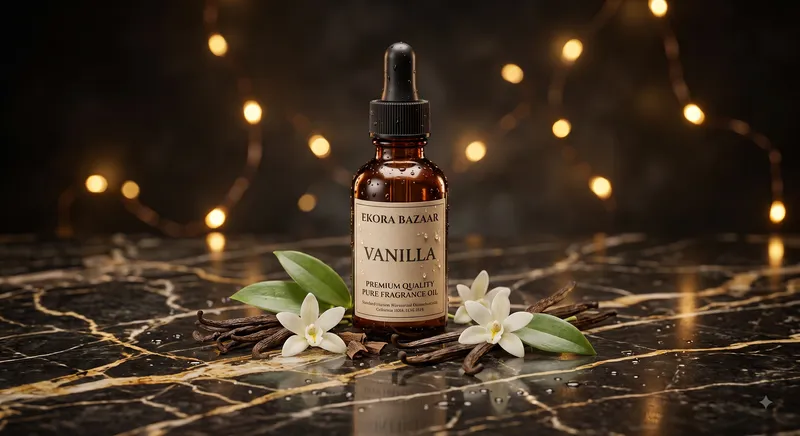
- Engineering Target: Fragrance oils are scientifically calibrated to solve specific manufacturing hurdles: maximizing hot scent throw in molten wax, resisting high alkaline degradation in soap, and reproducing aromas that cannot be naturally extracted (such as vanilla, sea salt, peach, rain, or freshly baked pastries).
- Browse our curated wholesale fragrance oils collection.
2. Head-to-Head Performance in Candle Making
The thermal environment of a burning candle reveals stark functional differences between the two categories:
Performance of Essential Oils in Candles
- Volatilization and Flash Points: Many essential oils (particularly citrus oils like sweet orange, lemon, and bergamot) are dominated by volatile monoterpenes with low flash points (45°C to 55°C). When added to molten wax, much of the delicate scent evaporates into the studio before pouring.
- The Hot Throw Challenge: When burned, the flame temperature (exceeding 800°C) often pyrolyzes delicate botanical terpenes. Instead of filling a large living room, pure essential oil candles produce a subtle, intimate aroma that stays close to the jar, occasionally developing a faint burnt or medicinal undertone.
- Cost Impact: Scenting a candle exclusively with high-grade pure essential oils requires higher loading (7% to 9%), significantly driving up unit manufacturing costs.
Performance of Fragrance Oils in Candles
- Engineered Thermal Stability: Quality candle fragrance oils are formulated with high flash points (typically 75°C to 105°C) and heavy synthetic fixatives designed to anchor aroma molecules inside the solid wax matrix until heat releases them evenly.
- Powerful Projection (Sillage): Fragrance oils project easily across large, open-concept rooms, delivering the strong, intoxicating "hot throw" that 85% of Indian retail consumers expect when purchasing luxury candles.
- Broad Olfactory Range: Allows you to create complex, multi-layered fantasy blends—such as "Smoked Oud & Spiced Tonka" or "Mahogany Wood & Cashmere"—that are physically impossible to create with essential oils alone.
3. Head-to-Head Performance in Soap Making
In cold process and melt-and-pour soap making, the chemical environment is equally demanding:
Behavior in Cold Process Soap
- Essential Oils in Soap: Essential oils generally behave predictably in cold process soap. Most herbal, woody, and floral essential oils (lavender, cedarwood, patchouli, lemongrass, rosemary) survive saponification well, do not accelerate trace, and do not cause vanillin browning. However, light citrus essential oils will fade within 4 to 8 weeks unless anchored with heavy base notes like cedarwood or bentonite clay.
- Fragrance Oils in Soap: Because fragrance oils contain diverse synthetic esters and aldehydes, certain profiles (spices, florals, vanillas) can cause dramatic acceleration, ricing, or dark brown vanillin discoloration. However, professional skin-safe fragrances provide vibrant, long-lasting scent that remains fresh in cured soap bars for over 18 months.
4. Cost Comparison and Financial Economics in India
The cost difference between fragrance oils and pure essential oils in India is profound:
| Aroma Material | Source Type | Wholesale Cost Range (INR per kg) | Typical Candle Cost Impact (16g per 200g jar) | | :--- | :--- | :--- | :--- | | Vanilla Bean Fragrance Oil | Synthetic Accord | ₹1,800 – ₹2,400 / kg | ₹28.80 – ₹38.40 | | Pure French Lavender Essential Oil | Steam Distilled | ₹4,500 – ₹7,500 / kg | ₹72.00 – ₹120.00 | | Sandalwood Fragrance Oil | Synthetic Accord | ₹2,200 – ₹3,200 / kg | ₹35.20 – ₹51.20 | | Pure Indian Sandalwood Oil (S. album) | Genuine Distillate | ₹1,20,000 – ₹1,80,000 / kg | ₹1,920.00 – ₹2,880.00 (Commercially unviable) | | Rose Damascena Fragrance Oil | Synthetic Accord | ₹2,000 – ₹2,800 / kg | ₹32.00 – ₹44.80 | | Pure Rose Otto / Absolute | Solvent / Steam | ₹2,50,000 – ₹4,00,000 / kg | ₹4,000.00+ per candle |
Economic Reality: Formulating true luxury floral or woody candles using 100% pure genuine Rose, Jasmine, or Sandalwood essential oil would require a single candle to retail for ₹4,000 to ₹10,000 just to break even! Fragrance oils democratize luxury perfumery, allowing makers to produce exquisite, compliant candles that retail profitably between ₹699 and ₹1,499.
5. Safety, Toxicology, and the "Natural" Myth
A widespread myth among consumers and beginner makers is that "natural essential oils are completely safe, while synthetic fragrance oils are toxic."
Cosmetic toxicologists know that reality is far more complex:
- Natural Does Not Mean Non-Toxic: Many pure essential oils contain naturally occurring, potent dermal allergens, sensitizers, and phototoxins. For instance, cold-pressed bergamot contains bergapten (which can cause severe blistering under sunlight); clove and cinnamon oils contain high levels of eugenol and cinnamaldehyde (which can cause chemical burns on skin if used above 0.5%).
- IFRA Standards Apply to Both: The International Fragrance Association (IFRA) regulates both essential oils and synthetic fragrance oils with equal rigor. Every essential oil has strict maximum quantitative usage thresholds for topical leave-on and rinse-off cosmetics.
- Phthalate-Free Fragrances: Modern professional fragrance oils used by artisan makers are strictly formulated phthalate-free, paraben-free, and cruelty-free, offering high dermal safety when formulated within documented IFRA category limits.
6. How to Choose the Right Strategy for Your Brand
To build a clear, distinctive brand identity in the Indian market:
1. The Aromatherapy / Botanical Wellness Line: If your brand identity centers on holistic mindfulness, Ayurvedic principles, clean ingredients, and subtle spa relaxation, formulate exclusively with pure essential oils using natural soy wax from our candle waxes collection. Transparently educate your customers that your candles provide gentle, natural botanical diffusion rather than overpowering room-filling perfume. 2. The Luxury Fine Home Fragrance Line: If your brand focuses on high-end home decor, rich sensory luxury, complex perfumery, and strong scent throw, formulate with IFRA-certified concentrated fragrance oils. 3. The Hybrid Synergy Line: Many top artisan studios combine both: using 70% fragrance oil for strong projection and complex structure, enhanced with 30% pure essential oil to impart authentic botanical depth.